What is 19 & 364?
People often ask me why I chose the name 19 & 364.
The truth is, I didn’t set out to create a name. It was simply what I found myself saying over and over.
“He was 19 years and 364 days old.”
Every time someone asked how old Bryant was, those were the words that came out. Eventually they became more than his age. They became everything I was trying to say.
Nineteen years and 364 days wasn’t enough.
It wasn’t enough time to watch him become the man he was growing into. It wasn’t enough time for the dreams he had or the life he deserved to live. It isn’t how any parent imagines their story with their child will end.
But 19 & 364 is about more than loss.
It’s my way of saying that Bryant’s story did not end with his last day.
His kindness didn’t end there.
His impact didn’t end there.
His light didn’t end there.
This website exists because I refuse to let those numbers become the only thing people know about him.
I want people to know the young man behind those numbers. I want them to see the kindness, the laughter, the heart, and the life that made Bryant who he was.
19 & 364 is my promise that his story will continue to be told.
It is my promise that his light will continue to reach people he never had the chance to meet.
And it is my promise that I will keep working toward a world where fewer families have to experience what ours did.
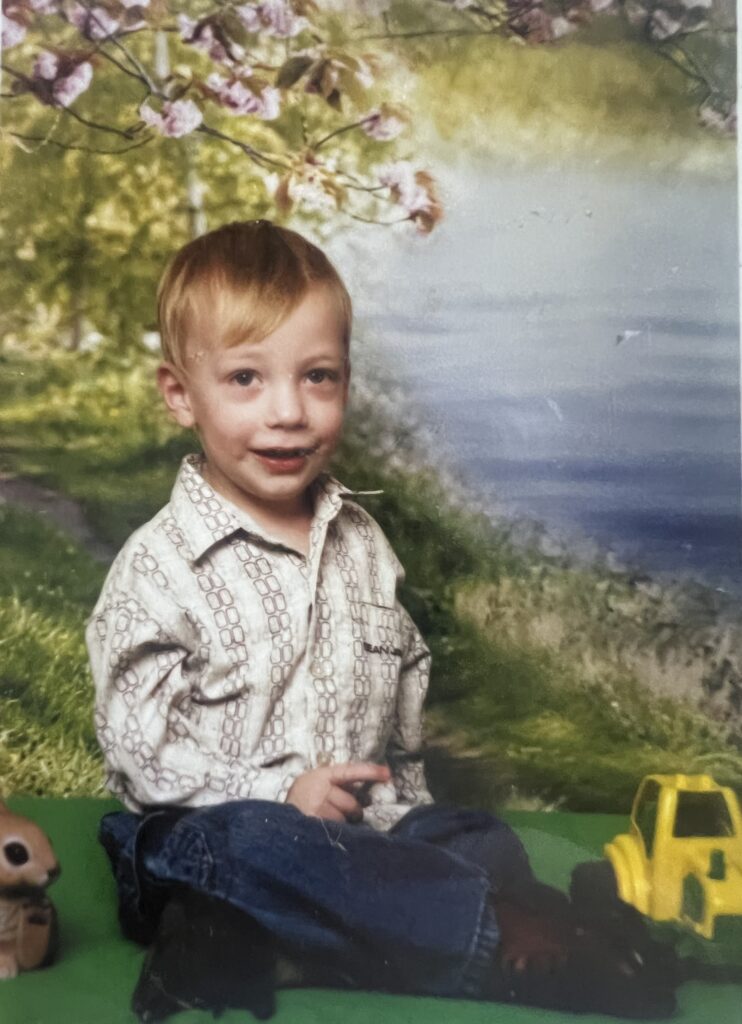
“He was 19 years and 364 days old.”
His kindness didn’t end there.
His impact didn’t end there.
His light didn’t end there.
Meet Bryant
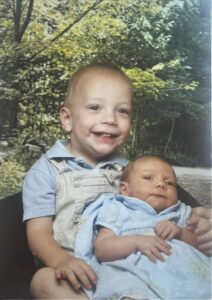
Bryant was born in Colorado. He came into the world early, a premature baby, but he came into it fighting. Looking back, that feels fitting because he never stopped.
He was a protector. Brave. Fearless, really.
He was born with a fire that never seemed to fade. Whether he was standing up for someone else or chasing something he believed in, Bryant wasn’t the kind of person to step back when something mattered.
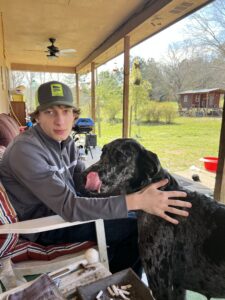
He loved people. He was kind, generous, and surprisingly tender, especially with people who were hurting or simply needed someone in their corner.
One thing Bryant could never tolerate was bullying. He believed people deserved better than that, and he wasn’t afraid to stand up when he saw someone being treated unfairly.
He was also incredibly opinionated, and without question the funniest person I’ve ever known. Some of my favorite memories are our never-ending arguments over college football. He loved being the one who knew every statistic, every record, every obscure fact. If there was a debate to be won, Bryant was already gathering evidence.
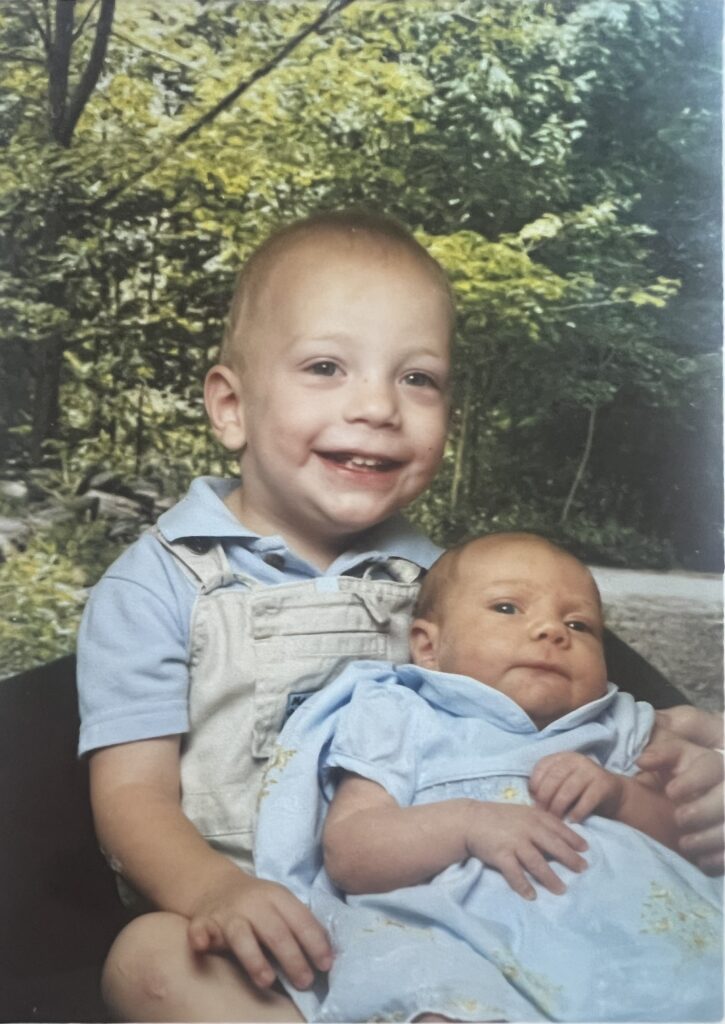
He was a protector. Brave. Fearless, really.
The Boy Behind the Strength
If you knew Bryant, you knew he was always dreaming about what came next.
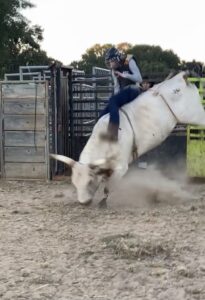
One of his biggest dreams was riding bulls. He loved the rodeo and always talked about one day putting cows in my grandmother’s old pasture that my mom inherited. He had it all figured out. He was going to raise cows, but not to sell to meat processors. He was going to sell them to rodeos. Looking back, it makes me smile because that was Bryant. He didn’t just have dreams. He had plans.
He loved Christmas and Thanksgiving. To him, those holidays were about everything that mattered most: family, food, laughter, and being together.
And then there was his birthday.
Bryant believed birthdays weren’t meant to last a day. Most years they lasted at least three weeks. There was the week before his birthday, his birthday week, and then somehow his birthday had just been last week for another week after that. He celebrated his birthday the way he lived life, as long as he could.
Bryant loved making people laugh. He was constantly telling jokes, especially the kind that didn’t make sense until five minutes later, when suddenly you realized what he’d done and couldn’t help but laugh. He was incredibly witty and intelligent, and sarcasm was practically his second language.
More than anything, Bryant was a protector.
When his friends started showing interest in girls, they usually got a preventative speech about his little sister because, according to Bryant, she was far too young to date. It didn’t matter what her actual age was. In his mind, she always needed someone looking out for her.
That instinct to protect people wasn’t just reserved for family.
When Bryant worked in loss prevention, people gave him a hard time because he would end up talking to the very people he was supposed to be watching. Instead of immediately seeing someone doing something wrong, he wanted to understand why.
One day he told me something I’ve never forgotten.
He said, “You shouldn’t judge someone when you don’t know their whole story. They could have been through something. How do you know you wouldn’t be in the same situation if you’d lived their life?”
I told him he needed to stop trying to save everyone else and worry more about himself.
He smiled and said,
“Mom, you may get on to me, but I’ll still have food and a place to live because I have you.”
Then he paused before adding,
“They don’t have you.”
That was Bryant.
He saw people the way they could be, not just the circumstances they were in.
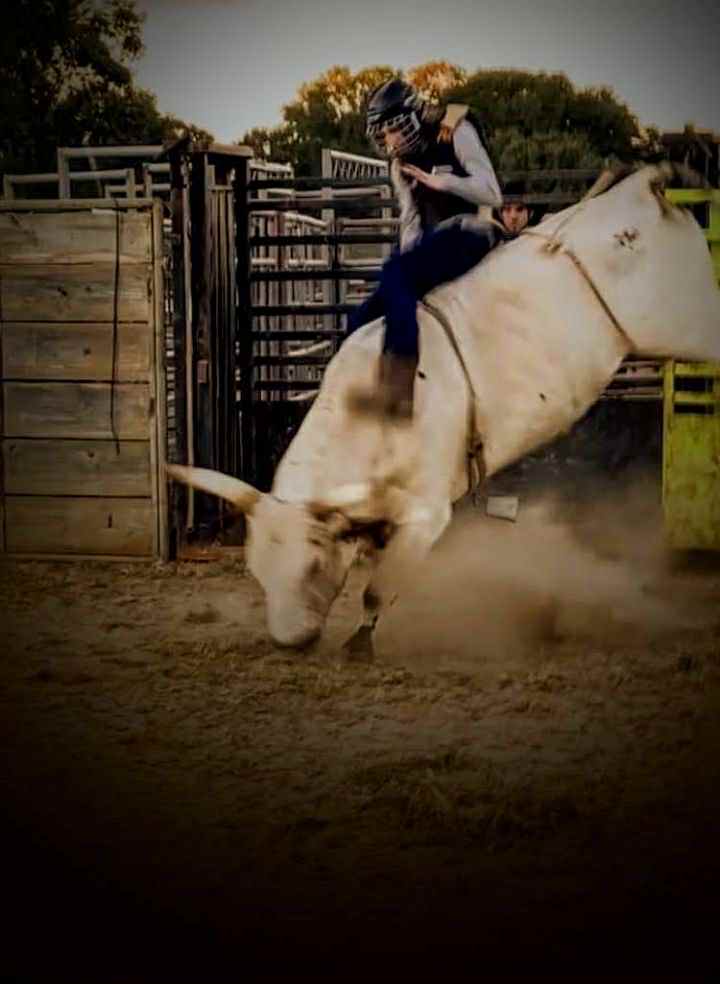
One of his biggest dreams was riding bulls.
What Happened
November 7, 2025, I received a phone call no parent should ever receive. My son had died in what I was told was a car accident, and I needed to get to Alabama.
The next seven days were a blur. We traveled from Alaska to Alabama. On November 8, instead of celebrating Bryant’s twentieth birthday, I was making arrangements for my nineteen-year-old son. Family, friends, and Bryant’s friends surrounded us as we tried to survive the unimaginable.
When we began our journey home to Alaska with Bryant, I received a second phone call.
It came from people who knew me and knew Bryant. They told me this was not at all what I had been led to believe. They told me there were witnesses and that Bryant had been chased and forced from the road.
For seven days, I believed I knew how my son had died. In one phone call, everything changed.
That phone call was the beginning of a journey I never expected to take. Instead of simply grieving the loss of my son, I found myself searching for answers. Why hadn’t I heard this from the people conducting the investigation? Why did it feel like every answer uncovered another question? Why were stories changing? Why was evidence lost? Why did it feel like the system was pushing us aside instead of helping us understand what happened?
Those questions became the beginning of everything that followed.
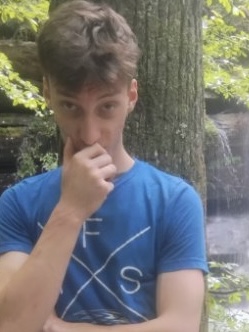
Bryant
“November 7, 2025, I received a phone call no parent should ever receive.”
Trusting the Process
When I had my initial conversation with the investigator, he told me there were two witnesses, a 911 call where false information had been given (a false name was given and he stated he had heard the crash through the woods) and a video showing the two trucks passing by at a high rate of speed. Although the Ring camera did not show the crash itself, I was told you could hear the crash on the audio after the trucks left the frame.
I was also told this was a no-contact force-off-the-road case, which could be harder to prosecute, and that reckless endangerment might be all they could get. It was even suggested that perhaps I should talk to some people about the drug cases he already had pending and rely on those cases to get him off the street.
I chose to have faith that with a video and witnesses, there would be enough to pursue at least manslaughter.
My husband and I tried to contact the DA’s office. My husband left messages on the DA’s machine in November and December. I spoke with office staff multiple times. I asked about being put on notifications for the case under my victims’ rights and was told they didn’t have the case file yet from investigators. Until they received it, there was no case to attach us to for notifications.
I trusted and believed that this was just the process and that it would be slow.
At first, I called the investigator weekly because the DA’s office told me that was who I needed to talk to. I was told there would be a revocation hearing as soon as it stopped being continued in court and that Bryant’s case would also be taken to a grand jury for an indictment.
I was also told there were three people expected to speak as witnesses, but I am not including their names here. They were individuals who were believed to have information about the events leading up to the crash. One of them was connected to both Bryant and Jordan through the events of that night, and another had been involved in the broader circumstances surrounding the situation. One of those individuals was also arrested a few weeks after Phillip.
So I waited and trusted the process.
There were questions, though. Things that didn’t seem to add up.
One of the things that bothered me most was something the investigator said to me. He told me he had been planning to call me that day because I was a mom and deserved to know.
But Jordan also died in that crash, and Stacey, his mom, is also a mom.
I learned what had happened on November 14 when I called investigators myself. On December 11, I finally worked up the courage to ask Stacey if she had been contacted by the Bear Creek Police Department.
She had not.
No one had even told her that her son had been killed this way, or that it was even a possibility.
How could they tell me they were going to call because the mom in me deserved to know, but not tell the other mom?
That was when I became seriously worried that this was not being handled correctly.
In December, I was also told that Bryant’s phone was severely damaged and that they could not access it without replacing the screen. I was told it was not the police department’s responsibility to have it repaired. I offered to pay for the repair myself so the phone could be accessed, but I was never given a clear answer on whether that was ever done. Since then, there have been conflicting accounts about whether the phones in this case were actually examined at all. We have been told at different times that they were and that they were not.
When we received Bryant’s death certificate, it said no toxicology testing had been performed. By then, I had started calling the investigator less because my calls and texts were rarely answered. But when I saw the death certificate, I started questioning things even more because the investigator had told me toxicology had been performed.
So I requested the crash report online.
It also showed no toxicology.
I was confused. I had been told there was toxicology, but now I had two documents that seemed to say otherwise.
What horrified me even more was what the crash report said about the crash itself. There was no mention of another vehicle or anything else that would make someone reading it understand what had actually happened. It looked as though Bryant had simply lost control of his truck because of what the report called “aggressive driving.”
I was upset because it made it look like this was Bryant.
He was 19 years old, scared, and being chased by a 40-year-old grown man and his ex-girlfriend, who Bryant had helped leave this man a few times already. Bryant had stood up for her when this man had hit her.
How was Bryant aggressive?
I would say defensive.
My husband reminded me that this could have been an initial crash report written before they knew everything that had happened. So I let it rest for the time being.
On March 14, we were told by a friend of Bryant’s dad that there would be a revocation hearing on March 17, the following Monday, which was also my birthday.
I called my mother and Stacey to let them know that I couldn’t arrange travel from Alaska to Alabama with only a few days’ notice. They would be there for Bryant and Jordan. I would have to come to the next court date.
At the revocation hearing, they talked about toxicology results and said drugs and alcohol had been found in Bryant’s system.
I was shocked and upset. I struggled with hearing that because I had always thought Bryant had done better than that.
Stacey was at the hearing, and she and others in attendance remember Phillip laughing and smiling through much of it.
But that wasn’t the only thing we learned that day.
It was during that hearing that we found out the photographs from the crash scene had been lost. No one had contacted me to tell me that photographs from the scene where my son died were gone. We learned about it because it came out during the revocation hearing.
That was one more thing I was trying to understand. How could crash-scene photographs be lost, and how could no one have told us?
Everyone there was emotional, so I made the decision to request and purchase the transcript from the revocation hearing. I wanted to know exactly what had been said.
When I received the transcript in April, I also received the Ring-camera footage and the 911 call. For the first time, I was able to listen to and review some of the evidence for myself instead of only relying on what I had been told.
The transcript also showed me things I hadn’t known before.
Investigator Jason Williams said he recognized Phillip’s voice on the 911 call. He knew his voice because he had known Phillip for years and had stood in his yard talking with him.
That stood out to me. From the beginning, I had been told there was a 911 call where false information had been given. Now I had the call myself, along with a transcript showing that the investigator recognized Phillip’s voice.
I was trying to process all of this while still waiting for news about Bryant’s case. We had contacted the DA’s office several times and were told they still didn’t have any record of the case in Marion County, where Bryant died.
We figured perhaps Winston County, where the revocation hearing had been held, hadn’t sent the information yet. We also knew the grand jury might only meet every few months.
So again, we waited.
Then, on April 30, Tod found the case on AlaCourt.
There was a court appearance scheduled for May 4 for reckless endangerment.
May 4 was my husband’s birthday.
I called the DA’s office and was finally able to speak with an assistant district attorney. She told me there was no need to come because this was only the beginning.
I told her I would be there.
As I asked her questions, she told me they could all be answered in a meeting before court because everyone involved in the process would be there.
I also told Stacey about the court date.
No one had told her about it either.
When I got to the courthouse that day, I found Stacey and her husband, and we all walked in together with my mom and Bryant’s dad. I showed them the video of the chase, and we waited.
I had never seen the man accused in the case, so I asked someone to point him out to me.
Nobody could find him.
We soon found out why.
They had forgotten to have him transported to the courthouse for the court hearing I had just traveled 4,000 miles to attend.
We were told it would be rescheduled, and they sent us to a side room to have the meeting I had been promised before court.
We sat there asking questions. Why this? Why that? Why had so many things happened the way they had?
At some point, the ADA left the room and said she would be back.
Then it was just the two families.
We waited.
I started wondering what was taking so long, so I went to find out.
The victims’ advocate saw me and told me to hurry. They were holding court over Zoom.
We were missing it.
They had left us sitting in that room while they allowed Phillip to enter a guilty plea without telling us it was happening. No one came back to get us. No one told us court had started. We weren’t included in the process we had been told we had a right to be part of.
I literally ran back to the room to get everyone else.
We rushed into the courtroom.
Phillip was appearing over Zoom on a computer screen near the judge, positioned where we couldn’t even see him. Stacey heard him asking whether the DUI would be taken off or added to the sentence he already had.
We would later learn that the DUI charge was dropped as part of the plea agreement in which he pleaded guilty to reckless endangerment.
By the time we got inside, the judge was asking the final questions about whether he understood what was happening.
And then it was over.
The case.
My son’s justice.
Everything I had traveled across the country to be involved in was finished without so much as a nod in our direction.
When Court Ended
When court ended, we walked back to the car in disbelief. I was exhausted from the travel and overwhelmed by everything that had happened, but I had planned to stop at the coroner’s office to request an official copy of Bryant’s toxicology report.
When I arrived, I asked for the complete coroner’s report. I was told there was nothing beyond Bryant’s death certificate. I explained that I had just left court, where Bryant’s case had been finished. The coroner’s office appeared unaware that Bryant had been forced off the road and told me that no toxicology testing had been performed on my son.
While I was there, they called the Alabama Department of Forensic Sciences. They were told that the investigator had delivered Bryant’s toxicology sample on November 17—ten days after my son died and eight days after he had been cremated.
For days, I did not know what to think or what I was supposed to do with that information. The coroner’s office told me they would help me get to the bottom of it.
On May 5, I contacted the investigator and asked for Bryant’s toxicology report. He said he would have to determine whether he could legally provide it to me. I followed up with him or spoke to him again on May 6, May 8, and May 10. On May 13, I was finally told that I would need to request the report directly from the Department of Forensic Sciences.
Later that day, I called the investigator again and asked whether he could at least tell me the results. He told me what the testing showed. When I asked who had collected the sample, he told me it had been done by the coroner.
I immediately called the coroner’s office and told them they were listed as having collected Bryant’s toxicology sample. They continued to maintain that they had not done it but again told me they would get to the bottom of what had happened. The next day, I texted them and was told they were still waiting for Forensic Sciences to return their call.
Shortly afterward, I was told that they had all discussed it the night before. Although they could not be certain, they now thought they remembered collecting Bryant’s toxicology sample. When I asked for the paperwork documenting it, I was told there was none because the investigator had picked it up.
I was left trying to understand how something as important as a toxicology sample could go from never having been collected, to being attributed to the coroner, to something they thought they might remember doing—with no paperwork to document it.
I began calling the district attorney’s office every day. Before this, I had been calling about twice a week. After approximately five days, I was told that the district attorney would not speak with me and that I needed to contact the Alabama Attorney General’s Office instead.
When I asked why, I was told it was because I was unhappy with the decisions they had made regarding Bryant’s case.
That was the moment my faith in the entire system collapsed. It was also the moment I decided that Bryant’s story would not end with their decision.
That was when 19 & 364 began.
The Fight for Accountability
Key date
November 2026
Sentence for Bryant’s death complete
Key date
2029
Parole on earlier charges ends
The outcome
1 year
Two misdemeanor reckless-endangerment counts